
How Long Debts, Collections and Bankruptcies Stay on an Ontario Credit Report
Ontario's Consumer Reporting Act caps how long most debts, collections, judgments and bankruptcies can be reported. The limits, what the bureaus usually do, and how to ask for old items to come off.
Bad marks on a credit report do not last forever. In Ontario, section 9(3) of the Consumer Reporting Act sets the longest time a credit bureau may keep reporting most negative items. If an old debt, collection, judgment or bankruptcy is still showing after that time, you can ask the bureau to remove it.
- Most debts and collections: no more than 7 years after your last payment (or after the default, if you never paid), unless the creditor confirms the debt is not statute-barred.
- Judgments: no more than 7 years after the judgment, unless the creditor confirms it is still unpaid.
- A first bankruptcy: no more than 7 years after discharge. Two or more bankruptcies can stay longer.
- Equifax and TransUnion often remove items sooner under their own policies.
- If an item is past its limit, dispute it in writing with the bureau.
The legal limits in Ontario
Section 9(3) lists what a bureau must not include in a report. The main limits are:

- Debts and collections. Not after 7 years from the date of last payment. If you never paid, the 7 years run from the default or the event that led to the collection. The exception: the creditor or its agent confirms the debt is not barred by statute, and that confirmation is in your file.
- Judgments. Not after 7 years from the date the judgment was given, unless the creditor confirms it is still unpaid in whole or in part, and that confirmation is in the file.
- Bankruptcy. Not after 7 years from the date of discharge, unless you have been bankrupt more than once.
- Taxes and fines. Payment or non-payment of taxes or lawful fines: not after 7 years.
- Court actions. Writs or lawsuits more than 7 years old, or started more than 12 months before the report, unless the bureau has checked their current status and recorded it.
- Criminal charges. Charges that were dismissed, set aside or withdrawn must never be reported.
- Other bad items. Any other negative item more than 7 years after it was acquired or last reaffirmed.
These are maximums. A bureau can drop an item sooner.
What the bureaus usually do
The Financial Consumer Agency of Canada (FCAC) summarizes the bureaus' general practices:
- Late payments and unpaid accounts: usually up to 6 years.
- Judgments: usually 6 years, but TransUnion keeps them for 7 years in Ontario.
- First bankruptcy: usually 6 years after discharge, but TransUnion keeps it for 7 years in Ontario.
- More than one bankruptcy: 14 years.
- Consumer proposal: 3 years after you pay all the debts in the proposal, or 6 years after you sign it, whichever comes first.
- Debt management plan through credit counselling: 2 years after you pay off the debts.
Bureau policies can change.
How to work out your date
- Get your free report from both Equifax and TransUnion.
- For each old item, find the "date of last payment," "date of last activity" or "date of discharge."
- Check it against your own records.
- Count forward 7 years (or the bureau's shorter period).
Be careful with old debts. Under the Act, the 7 years for a debt or collection run from the last payment, so a new payment, even a small one, can start that clock again. Under section 13 of the Limitations Act, 2002, a part payment or a signed written admission of the debt can also restart the time a creditor has to sue you. Before you pay anything on a very old debt, get advice.
How to ask for removal
- Write to each bureau. Use its dispute process online or by mail (TransUnion also takes phone disputes).
- Name the item. Give the creditor, the account number and the key date.
- Say why. For example: "This collection is more than 7 years past my last payment. Under section 9(3)(f) of the Consumer Reporting Act it must not be reported."
- Attach proof. Send copies of statements, a discharge certificate, or court papers that show the dates.
- Keep records. Save copies and note the date you sent it.
The bureau must check the item within a reasonable time and correct or delete it if it is wrong. If it says the creditor confirmed the debt is not statute-barred, or a judgment is unpaid, ask for details. You can also add a free explanatory statement of up to 200 words. If the bureau will not deal with it properly, complain to the Registrar of Consumer Reporting Agencies through Consumer Protection Ontario.
Removal does not erase the debt
Taking an item off your report does not cancel what you owe. A creditor may still have a judgment it can enforce. Bankruptcy and proposal records also stay on the public record with the federal Office of the Superintendent of Bankruptcy.
Common questions
Does paying a collection remove it?
Not always. Paying usually changes the item to "paid," but it may stay until the time limit ends. Ask the collector in writing what it will report before you pay.
Can I get a consumer proposal removed early?
Usually no. The bureaus remove it 3 years after you finish paying, or 6 years after you signed, whichever comes first.
A licensed paralegal at NEO can help you with dispute letters to the bureaus, a complaint to the Registrar, negotiation with collectors, and Small Claims Court debt claims. For bankruptcy or a consumer proposal, see a Licensed Insolvency Trustee. Call 647-200-3526 or toll-free 888-519-2435, email info@neolegalservices.com, or book a free consultation.
Sources
- Consumer Reporting Act, R.S.O. 1990, c. C.33
- Credit reports (Government of Ontario)
- How long information stays on your credit report (FCAC)
- Limitations Act, 2002, S.O. 2002, c. 24, Sched. B
Read next: Debt Collection in Ontario: Your Rights
General Ontario legal information, not legal advice for your matter, and reading it does not create a retainer. Sources checked 27 November 2026: check the current law, forms and dates before you act.
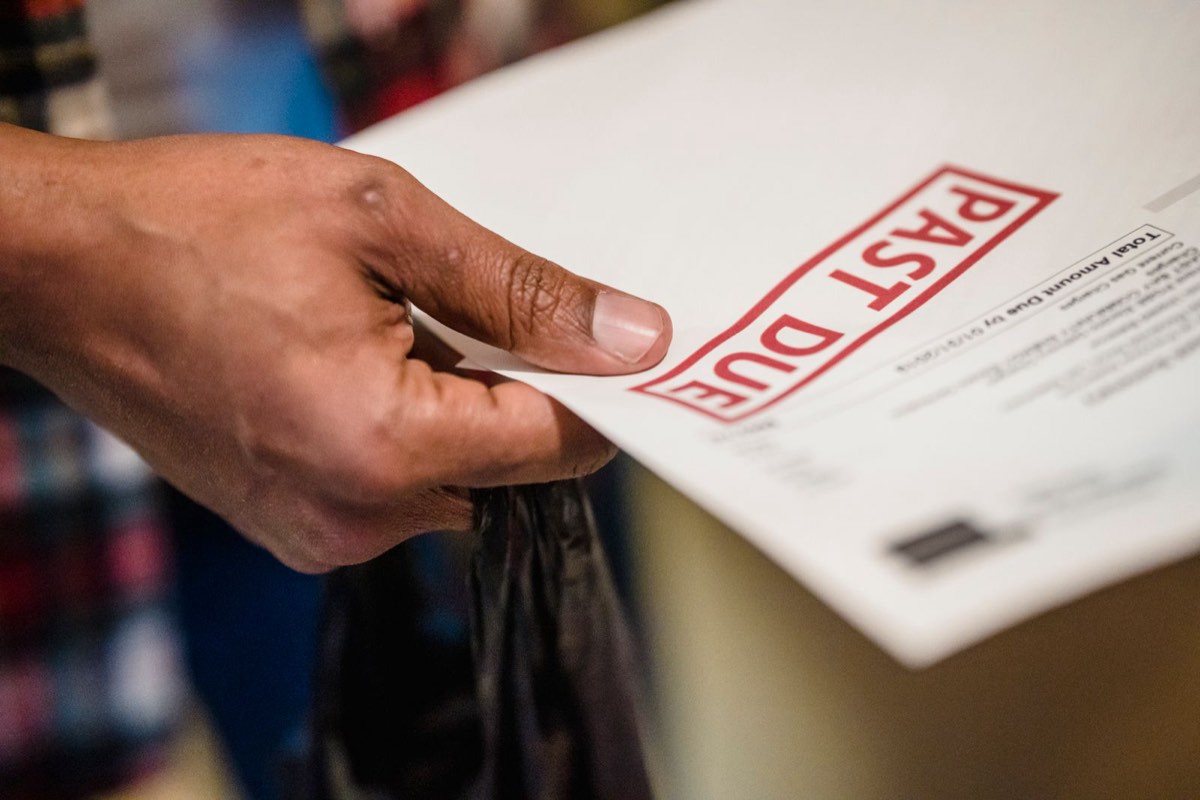
Photos from Pexels: A hand holding a document stamped Past Due · Papers labelled Paid and Due beside a calculator and glasses.
This article is general information for people in Ontario, not legal advice. Rules, forms and deadlines change, and every situation is different. Check the current rule or speak to a licensed legal professional before you act.
Not sure where you stand? A licensed paralegal can look at your documents and tell you your options.
Book a Free ConsultationLoading comments…



 PIPEDA-compliant⚖️ By-Law 9 trust accounting checks🛡️ Professional liability insured✅ LSO-licensed paralegal🔐 256-bit AES Encryption📋 Working toward WCAG 2.1 AA🇨🇦 Ontario-based firm🕒 SOC 2-audited hosting providers📄 CASL Compliant💻 Secure Client Portal📊 Transparent Fixed Fees🔍 Verified Google Reviews🤝 Free Initial Consultation🏛️ Law Society of Ontario📜 Professional Corporation🔏 Confidential by professional duty🌐 Province-Wide Service💬 Court interpreters in most languages⏱️ Same-Day Intake Response🗂️ Paperless Document Vault🔄 Real-Time Case Tracking🎓 Honours paralegal graduate · LLB in progress📱 Mobile-friendly client portal🧾 Upfront, written fees🔗 TLS 1.3 Secure Connections🛂 ID checks at sign-up (By-Law 7.1)🧑⚖️ Paralegal Scope of Practice📆 Flexible Appointment Booking💼 Small Business Friendly

