
Sent an e-Transfer to the Wrong Person? Getting Your Money Back in Ontario
What to do when an Interac e-Transfer or payment goes to the wrong person: calling your bank fast, the bank complaint and OBSI route, a demand letter, and a Small Claims Court claim for money paid by mistake (unjust enrichment).

One wrong digit in a phone number or one tap on the wrong contact, and your Interac e-Transfer or bill payment lands with a stranger. Once the money is deposited, your bank usually cannot just reverse it. But the person who got it generally has no right to keep it, and in Ontario you can ask for it back and, if needed, sue for it.
- Call your bank right away. If the e-Transfer has not been accepted, you may be able to cancel it yourself.
- If it was deposited, your bank can ask the receiving bank to contact the person. Return is usually voluntary at this stage.
- A person who receives money by mistake is usually unjustly enriched and must pay it back.
- Send a written demand. If that fails, you can claim up to $50,000 in Small Claims Court, generally within two years.
- If you were tricked into sending the money, that is fraud, not a mistake. Report it to police as well.
Step 1: Act within minutes, not days
- Check the status. In your banking app, look at the transfer. If it still says pending, cancel it. The money comes back to you.
- Call your bank's fraud or e-Transfer line. Explain that you sent money to the wrong person by mistake. Give the date, time, amount, the email or phone number used and the reference number.
- Ask the bank to contact the receiving bank. If the person uses autodeposit, the money went straight into their account. Your bank can still ask the receiving bank to request a return.
- Write it all down. Note who you spoke to, when, and the file or case number.
Step 2: Contact the person, carefully
If you know who received the money, reach out politely.
- Explain the mistake and the exact amount.
- Ask them to send it back by e-Transfer to the same address you used.
- Keep it in writing, and do not threaten them.
If you do not know who it is, your bank generally will not give you their name because of privacy rules. Getting a court order to make a bank name an account holder is a Superior Court step, and you need a lawyer for it.
Step 3: Make a complaint if your bank does not help
Your bank must handle your complaint under federal rules. It must give you a detailed written response within 56 calendar days from when you first made the complaint. If you are not satisfied, or more than 56 days pass, you can take it to the Ombudsman for Banking Services and Investments (OBSI). OBSI is free.
Be realistic. If you typed the wrong address, the bank may not be at fault. A complaint helps most when the bank delayed or did not follow its own process.
Step 4: Send a demand letter
If the person refuses, or goes silent, send a demand letter. It should:
- Name the date, amount and method of payment.
- Explain that the payment was a mistake and that they had no right to it.
- Ask for repayment by a firm date, for example 10 business days.
- Say that you may start a Small Claims Court claim without further notice.
Attach proof of the transfer and send it by a method you can track.
Step 5: Sue for money paid by mistake
In Ontario, money paid by mistake is usually recovered as unjust enrichment. You must show three things:
- The person was enriched. They received your money.
- You lost the same amount. It came out of your account.
- There is no legal reason for them to keep it. They did not sell you anything, you did not owe them, and it was not a gift.
If those are proven, the court can order the money returned. In some cases the person may raise a defence, for example that they honestly spent it relying on the payment. Defences like this are narrow.
How to file:
- Deadline. You generally have two years from when you discovered the claim (Limitations Act, 2002).
- Where. You can file in Small Claims Court for up to $50,000. File where the person lives or carries on business, or where the events happened.
- Form. Use a Plaintiff's Claim (Form 7A). Attach your transfer record, your bank notes and your demand letter.
- Interest and costs. Ask for pre-judgment interest and your court costs.
You need the person's name and address to serve them.
If it was a scam, not a mistake
If someone tricked you, for example a fake landlord, a fake seller or a person pretending to be your bank, treat it as fraud.
- Call your bank's fraud line right away.
- Report to your local police and to the Canadian Anti-Fraud Centre.
- Keep every message and screenshot.
You can sue a scammer you can identify, but collecting is often hard.
Common questions
The person spent the money. Do they still have to pay?
Usually yes. Spending the money does not by itself give them the right to keep it. A judgment can be collected through garnishment or other enforcement steps.
Can my bank just take the money back from their account?
Generally not without the account holder's agreement or a court order. That is why many recoveries depend on the person agreeing to return it.
Is it worth suing for a few hundred dollars?
It can be. Compare the court fees and your time with the amount, and send a firm demand letter first.
NEO's licensed paralegals can write your demand letter, help with your bank complaint and represent you in a Small Claims Court claim up to $50,000; if you need a court order to identify an unknown recipient, or the amount is over $50,000, you need a lawyer. Call 647-200-3526 or toll-free 888-519-2435, email info@neolegalservices.com, or book a free consultation.
Sources
- How to file a complaint with your bank (Financial Consumer Agency of Canada)
- Dealing with your bank's external complaints body: your rights (FCAC)
- Limitations Act, 2002 (e-Laws)
- O. Reg. 626/00: Small Claims Court jurisdiction (e-Laws)
- Small claims court: suing someone (Ontario)
Read next: Garland v. Consumers Gas: Unjust Enrichment
General Ontario legal information, not legal advice for your matter, and reading it does not create a retainer. Sources checked 27 November 2026: check the current law, forms and dates before you act.
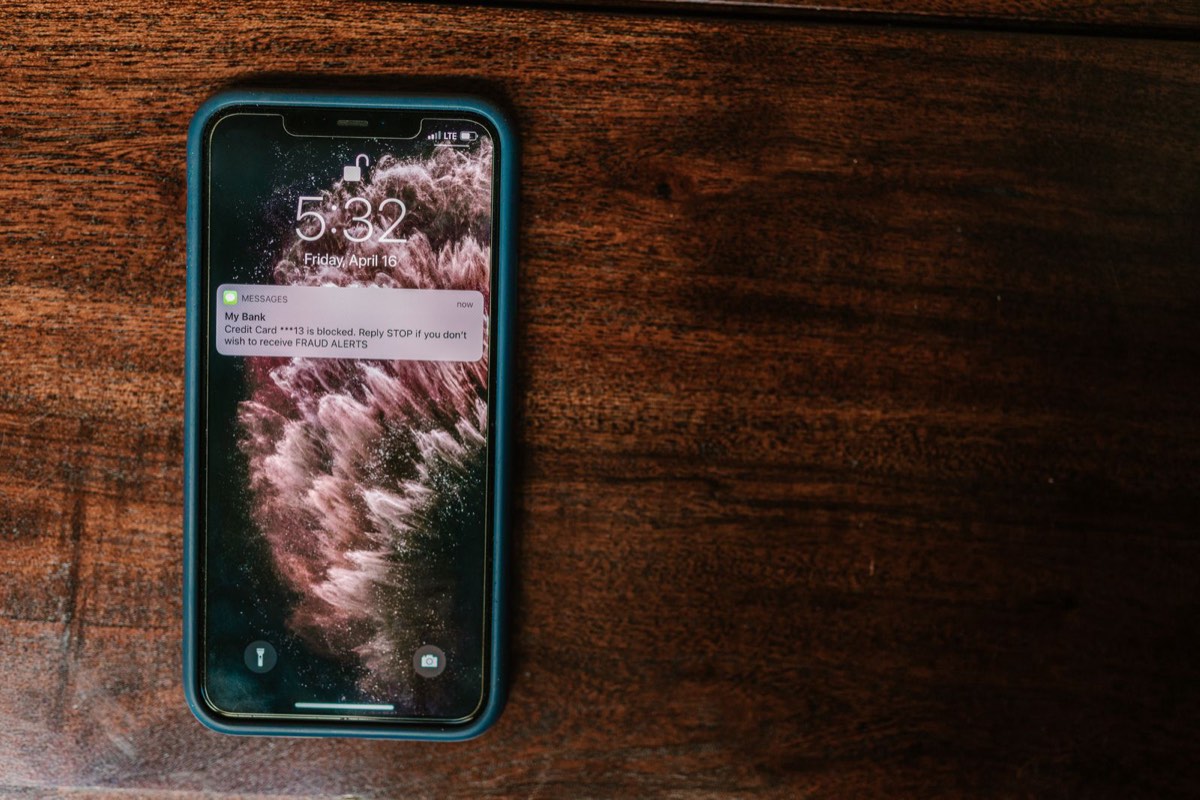
Photos from Pexels: A hand holding a smartphone with a payment app · A smartphone showing a bank alert message.
This article is general information for people in Ontario, not legal advice. Rules, forms and deadlines change, and every situation is different. Check the current rule or speak to a licensed legal professional before you act.
Not sure where you stand? A licensed paralegal can look at your documents and tell you your options.
Book a Free ConsultationLoading comments…



 PIPEDA-compliant⚖️ By-Law 9 trust accounting checks🛡️ Professional liability insured✅ LSO-licensed paralegal🔐 256-bit AES Encryption📋 Working toward WCAG 2.1 AA🇨🇦 Ontario-based firm🕒 SOC 2-audited hosting providers📄 CASL Compliant💻 Secure Client Portal📊 Transparent Fixed Fees🔍 Verified Google Reviews🤝 Free Initial Consultation🏛️ Law Society of Ontario📜 Professional Corporation🔏 Confidential by professional duty🌐 Province-Wide Service💬 Court interpreters in most languages⏱️ Same-Day Intake Response🗂️ Paperless Document Vault🔄 Real-Time Case Tracking🎓 Honours paralegal graduate · LLB in progress📱 Mobile-friendly client portal🧾 Upfront, written fees🔗 TLS 1.3 Secure Connections🛂 ID checks at sign-up (By-Law 7.1)🧑⚖️ Paralegal Scope of Practice📆 Flexible Appointment Booking💼 Small Business Friendly

