
Pothole or Broken Sidewalk Damage in Ontario: The 10-Day Notice and Suing the City
How to claim against an Ontario municipality for car or property damage, or a trip, caused by a pothole or broken sidewalk: the 10-day written notice under Municipal Act s. 44(10), the Minimum Maintenance Standards the city will rely on, and filing in Small Claims Court.
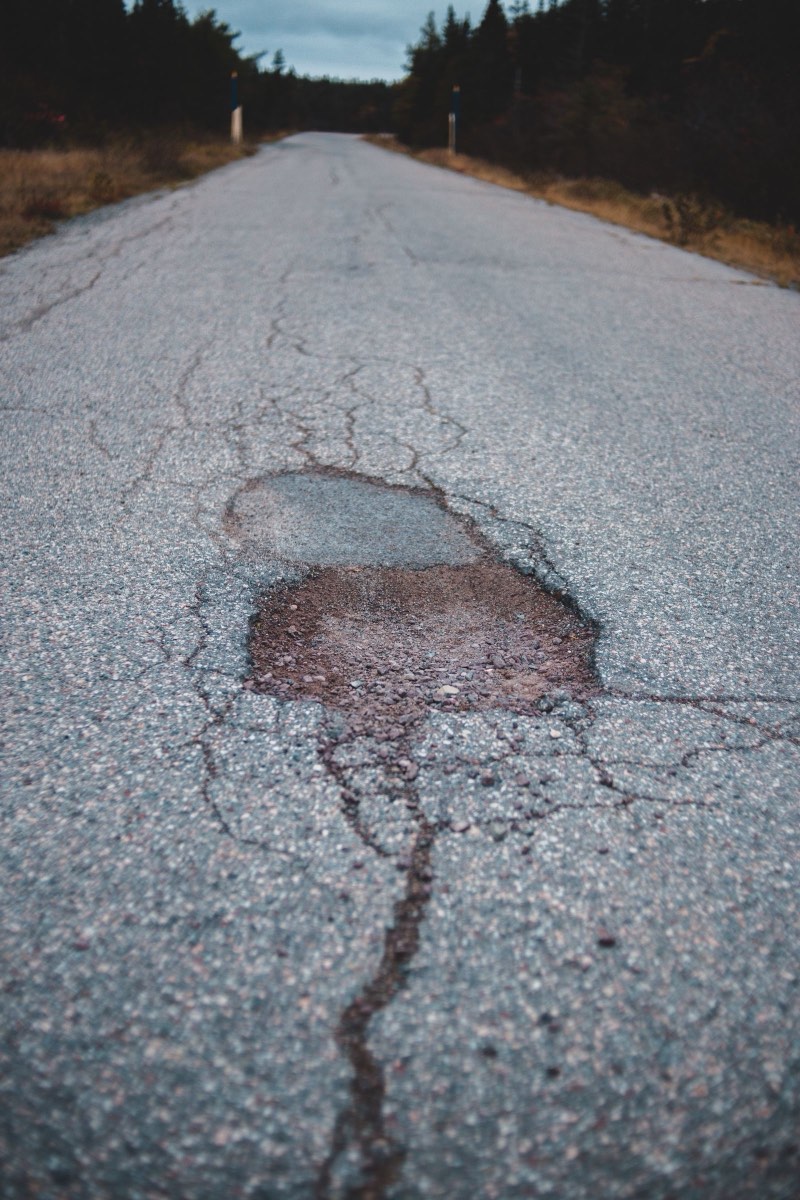
A deep pothole can bend a rim, blow a tire or knock out your car's alignment. A lifted sidewalk slab can trip you and cause an injury. In Ontario you may be able to claim against the city, but you must give written notice within 10 days, and the city has strong defences.
- A city must keep its roads, bridges and sidewalks in a state of repair that is reasonable in the circumstances (Municipal Act, 2001, s. 44).
- Send written notice to the municipal clerk within 10 days of the incident. Include the date, time and location. Use registered mail or deliver it, and keep proof.
- The city is not liable if it met the provincial Minimum Maintenance Standards (O. Reg. 239/02), did not know and could not reasonably have known, or took reasonable steps.
- You generally have two years to sue. Claims up to $50,000 can go to Small Claims Court.
Step 1: Give the 10-day written notice
Under s. 44(10) of the Municipal Act, 2001, you cannot sue unless written notice of the claim is served on, or sent by registered mail to, the clerk of the municipality within 10 days after the incident. In Toronto, the same rule is in s. 42(6) of the City of Toronto Act, 2006, and notice goes to the city clerk.
Your notice should include:
- Your name and contact details.
- The date and time of the incident.
- The exact location: street, nearest address or intersection, direction of travel, and lane.
- What happened and what was damaged or injured.
- A statement that you are making a claim against the municipality.
If your city has an online claim form, use it too, but do not rely on it alone. If a regional municipality may own the road, send notice to each clerk.
Missed the deadline? A judge may still allow the case if you had a reasonable excuse and the city was not prejudiced (s. 44(12)). Do not count on this.
Step 2: Collect evidence right away
Potholes get patched fast, so act the same day.
- Photos of the pothole or sidewalk with a ruler or tape measure in the shot. Show width and depth.
- Photos of the damage to your car, tire or rim, or of your injury.
- Dash-cam video, witness names, and tow, repair and medical receipts.
- Any 311 report you made, and whether others reported the same spot.
What the city will argue: Minimum Maintenance Standards
Section 44(3) gives the city three defences. The most important is that it met the Minimum Maintenance Standards for Municipal Highways (O. Reg. 239/02).
Potholes. Each road has a class based on its speed limit and traffic. A pothole on a paved road is treated as in repair unless it is both larger than a set area and deeper than 8 cm. The area is 600 cm² on Class 1 roads and up to 1,000 cm² on Class 3 to 5 roads. Once the city becomes aware of a pothole over the limit, it has a set time to fix it. That time is 4 days on Class 1 and 2 roads and up to 30 days on quiet Class 5 roads.
Sidewalks. The standard is one inspection each calendar year, with no more than 16 months between inspections. A step or lip of 2 cm or less is treated as in repair. Once the city becomes aware of a step over 2 cm, it has 14 days to treat it, for example by repairing it or marking it.
What this means for you. The city will produce its patrol and inspection records. Your claim is stronger if:
- the hole or lip was larger than the standard allows,
- the city knew or should have known, for example from earlier 311 complaints, and
- it did not fix it within the allowed time.
You can ask for the city's records through a freedom of information request.
Other limits to know
- Snow and ice on sidewalks. The city is not liable for an injury from snow or ice on a sidewalk unless it was grossly negligent (s. 44(9)).
- Your own share. Your damages can be cut if you were speeding or not watching your step (Negligence Act).
- Insurance. Your collision coverage may pay for car damage, less your deductible. If it does, your insurer may pursue the city. Tell your insurer before you settle anything.
Suing in Small Claims Court
- Check the deadline. You generally have two years from when you discovered the claim (Limitations Act, 2002, s. 4). The 10-day notice does not extend this.
- Name the right defendant. Use the municipality's legal name, for example "The Corporation of the City of …". Check who owns the road.
- File a Plaintiff's Claim (Form 7A). Claim repairs, towing, rental car and any injury losses. Attach your notice, photos and receipts.
- Prepare for the defence. Be ready to show why the standards were not met.
Common questions
What if the pothole was on a provincial highway?
Provincial highways, such as most 400-series highways, are kept up by the Ministry of Transportation, not the city. Claims against the Province have their own notice rules under the Public Transportation and Highway Improvement Act and the Crown Liability and Proceedings Act, 2019. Send written notice to the Ministry right away and get advice quickly. Highway 407 ETR is privately run, so contact the operator.
Does a 311 call count as my 10-day notice?
Usually not. The Act requires written notice to the clerk. Send a letter even if you also called 311.
NEO's licensed paralegals can draft your 10-day notice, negotiate with the city's insurer and represent you in Small Claims Court for claims up to $50,000; if you have a serious injury or a claim over $50,000, you need a lawyer. Call 647-200-3526 or toll-free 888-519-2435, email info@neolegalservices.com, or book a free consultation.
Sources
- Municipal Act, 2001, s. 44 (e-Laws)
- City of Toronto Act, 2006, s. 42 (e-Laws)
- O. Reg. 239/02: Minimum Maintenance Standards for Municipal Highways (e-Laws)
- Limitations Act, 2002 (e-Laws)
- Small claims court: suing someone (Ontario)
Read next: Slip & Fall Claims: Occupier's Liability
General Ontario legal information, not legal advice for your matter, and reading it does not create a retainer. Sources checked 27 November 2026: check the current law, forms and dates before you act.
Photos from Pexels: A road with a large pothole · A patched section of cracked asphalt.
This article is general information for people in Ontario, not legal advice. Rules, forms and deadlines change, and every situation is different. Check the current rule or speak to a licensed legal professional before you act.
Not sure where you stand? A licensed paralegal can look at your documents and tell you your options.
Book a Free ConsultationLoading comments…



 PIPEDA-compliant⚖️ By-Law 9 trust accounting checks🛡️ Professional liability insured✅ LSO-licensed paralegal🔐 256-bit AES Encryption📋 Working toward WCAG 2.1 AA🇨🇦 Ontario-based firm🕒 SOC 2-audited hosting providers📄 CASL Compliant💻 Secure Client Portal📊 Transparent Fixed Fees🔍 Verified Google Reviews🤝 Free Initial Consultation🏛️ Law Society of Ontario📜 Professional Corporation🔏 Confidential by professional duty🌐 Province-Wide Service💬 Court interpreters in most languages⏱️ Same-Day Intake Response🗂️ Paperless Document Vault🔄 Real-Time Case Tracking🎓 Honours paralegal graduate · LLB in progress📱 Mobile-friendly client portal🧾 Upfront, written fees🔗 TLS 1.3 Secure Connections🛂 ID checks at sign-up (By-Law 7.1)🧑⚖️ Paralegal Scope of Practice📆 Flexible Appointment Booking💼 Small Business Friendly

